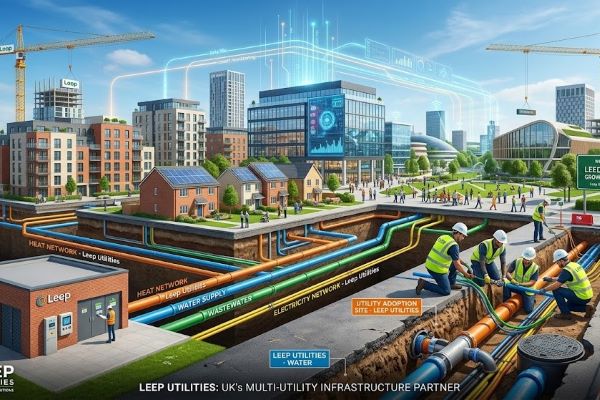
Leep Utilities is a UK-based multi-utility infrastructure company that develops and operates essential services such as electricity, water, wastewater, and heat networks for new residential, commercial, and mixed-use developments. The company specializes in last-mile utility delivery, meaning it ensures that newly built properties are connected to reliable and efficient utility systems. By working closely with developers, Leep Utilities designs, installs, and manages complex infrastructure that supports modern urban growth. Its role includes adopting utility networks and maintaining them long-term under regulatory frameworks, making it an important contributor to the UK’s infrastructure development sector.
Table of Contents
ToggleIntroduction to Leep Utilities
Leep Utilities is part of the modern infrastructure ecosystem in the United Kingdom, where rapid urban development requires efficient and coordinated utility solutions. As cities expand and large-scale construction projects increase, the demand for integrated services such as electricity distribution, water supply, wastewater management, and heating systems has grown significantly. Traditional utility models often separate these services into different providers, which can create delays and inefficiencies during development. Leep Utilities addresses this challenge by offering a unified multi-utility approach.
The company operates at the intersection of construction, engineering, and utility management. Its primary focus is on delivering “last-mile” infrastructure, which refers to the final stage of connecting utility networks to homes, businesses, and industrial facilities. This role is critical in ensuring that newly built developments are fully functional and ready for occupancy.
The Role of Leep Utilities in Modern Infrastructure
The importance of Leep Utilities lies in its ability to streamline utility provision in complex development environments. Large construction projects require coordination between multiple stakeholders, including developers, local authorities, regulators, and utility providers. Without a coordinated system, delays and inefficiencies can significantly increase costs and slow down project completion.
Leep Utilities acts as a central operator that simplifies this process. Instead of developers dealing separately with electricity companies, water authorities, and heating providers, they can work with a single organization responsible for multiple utilities. This integrated model reduces complexity and improves project efficiency.
Another key aspect of the company’s role is infrastructure adoption. Once utility networks are installed within a development, they need to be maintained and operated safely over time. Leep Utilities takes ownership of these systems through regulatory frameworks, ensuring long-term reliability and compliance with industry standards.
How Leep Utilities Operates
Leep Utilities follows a structured process to deliver utility infrastructure for development projects. This process typically includes planning, design, construction, adoption, and long-term operation.
Planning and Consultation
The first stage involves collaboration with property developers and project stakeholders. During this phase, Leep Utilities assesses the utility requirements of a development site. Factors such as the size of the project, expected population, energy demand, water usage, and environmental considerations are analyzed to design an appropriate infrastructure solution.
Early-stage planning is critical because utility systems must be integrated into the overall design of the development. Proper coordination ensures that infrastructure is efficient, scalable, and compliant with regulations.
Design of Utility Networks
Once requirements are identified, engineering teams design the utility networks. This includes electrical distribution systems, water pipelines, wastewater drainage, and heating or cooling systems. Each system must be carefully planned to ensure safety, efficiency, and long-term durability.
The design process also includes sustainability considerations. Modern developments increasingly require low-carbon and energy-efficient solutions. Leep Utilities incorporates these requirements into its infrastructure planning to support environmental goals.
Construction and Installation
After the design phase, physical construction begins. This involves laying underground cables, installing pipelines, building substations, and setting up network infrastructure. The construction stage requires coordination with contractors, engineers, and regulatory bodies to ensure that all systems are installed correctly and safely.
Quality control is an essential part of this phase. Utility infrastructure must meet strict technical standards to ensure reliable long-term operation.
Adoption of Networks
Once the infrastructure is built, it is adopted by Leep Utilities under specific regulatory arrangements. This means the company becomes responsible for operating and maintaining the utility systems. Adoption is a key feature of the UK utility framework and ensures that infrastructure remains properly managed even after construction is complete.
Operation and Maintenance
The final stage involves long-term operation and maintenance. Leep Utilities monitors utility performance, carries out repairs when necessary, and ensures compliance with safety and regulatory standards. This ongoing management ensures that residents and businesses receive uninterrupted utility services.
Core Services Provided by Leep Utilities
Leep Utilities operates across multiple utility sectors, making it a diversified infrastructure provider.
Electricity Networks
The company designs and operates electrical distribution systems that deliver power from the main grid to end users. This includes high-voltage and low-voltage networks, depending on the scale of the development. Electrical infrastructure is a critical component of modern construction, especially for large residential and commercial sites.
Water Supply Systems
Water distribution networks are another key area of operation. These systems ensure that clean and reliable water is delivered to buildings. Leep Utilities manages both the installation and long-term maintenance of water infrastructure within developments.
Wastewater Management
Proper wastewater disposal is essential for environmental safety and public health. Leep Utilities designs drainage and wastewater systems that safely transport used water away from properties to treatment facilities.
Heat Networks
Heat networks, also known as district heating systems, provide centralized heating solutions to multiple buildings. These systems are increasingly popular in sustainable developments because they reduce energy consumption and carbon emissions.
Importance of Last-Mile Utility Delivery
One of the most important concepts in Leep Utilities’ operations is last-mile delivery. This refers to the final stage of connecting utility infrastructure to end users within a development.
Last-mile infrastructure is often the most complex part of utility deployment because it involves detailed integration within densely built environments. Roads, buildings, and underground systems must all be carefully coordinated.
Leep Utilities specializes in solving these challenges by providing end-to-end solutions that ensure utilities are fully operational at the point of occupancy. This reduces delays and improves the efficiency of development projects.
Leep Utilities and Urban Development
Urban development in the UK has accelerated significantly due to population growth and economic expansion. Large-scale projects such as residential communities, commercial hubs, and mixed-use developments require advanced infrastructure systems.
Leep Utilities plays a supporting role in enabling these developments by ensuring that essential services are delivered efficiently. Without reliable utility infrastructure, modern urban projects cannot function effectively.
The company’s work supports smart city initiatives, where integrated infrastructure systems contribute to improved efficiency, sustainability, and quality of life.
Sustainability and Innovation
Sustainability is a major focus in modern infrastructure development, and Leep Utilities incorporates environmental considerations into its operations. This includes designing energy-efficient systems, reducing carbon emissions, and supporting renewable energy integration where possible.
Heat networks, for example, can utilize waste heat from industrial processes or data centers, reducing the need for traditional fossil-fuel-based heating systems. Similarly, modern electrical infrastructure can support renewable energy sources such as solar and wind power.
Innovation also plays a role in how the company operates. Advanced engineering methods, digital monitoring systems, and smart infrastructure technologies are increasingly being used to improve efficiency and reliability.
Regulatory Framework and Compliance
Leep Utilities operates under strict regulatory frameworks that govern utility infrastructure in the UK. These regulations ensure that services are safe, reliable, and environmentally responsible.
The company often works under arrangements such as Independent Distribution Network Operator (IDNO) and New Appointment and Variation (NAV) frameworks. These legal structures allow private companies to operate utility networks while maintaining compliance with national standards.
Regulatory compliance is essential for maintaining trust and ensuring long-term operational stability in the utility sector.
Challenges in the Utility Sector
Despite its importance, the utility sector faces several challenges. These include increasing demand for infrastructure, rising sustainability requirements, and the complexity of integrating multiple utility systems into dense urban environments.
Leep Utilities must also manage technical challenges such as grid capacity limitations, aging infrastructure integration, and evolving regulatory requirements.
However, these challenges also create opportunities for innovation and growth. Companies that can deliver efficient, sustainable, and integrated solutions are well-positioned to succeed in the evolving infrastructure landscape.
Future Outlook of Leep Utilities
The future of Leep Utilities is closely tied to the growth of urban development and infrastructure modernization in the UK. As demand for housing, commercial space, and sustainable energy systems continues to rise, multi-utility providers will play an increasingly important role.
Technological advancements such as smart grids, digital monitoring systems, and low-carbon energy solutions are expected to shape the future of utility infrastructure. Leep Utilities is likely to continue expanding its capabilities in these areas.
Data centers, in particular, represent a growing opportunity due to their high energy demands and need for reliable infrastructure. Heat recovery and energy optimization systems are expected to become more important in this sector.
Conclusion
Leep Utilities is a key player in the UK’s modern infrastructure ecosystem, specializing in the delivery and management of essential utility networks for large-scale developments. By integrating electricity, water, wastewater, and heating systems into a unified service model, the company simplifies complex construction requirements and supports efficient urban growth.
Its role in last-mile utility delivery ensures that new developments are fully functional, sustainable, and compliant with regulatory standards. As urbanization continues and infrastructure demands increase, Leep Utilities is positioned to remain an important contributor to the future of modern development in the United Kingdom.