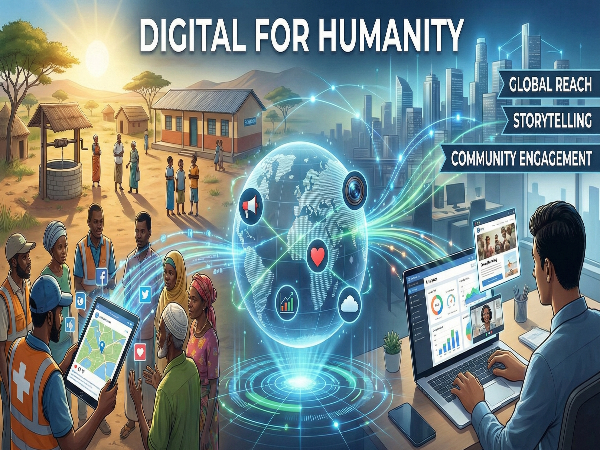
Digital for Humanity is about harnessing digital media — websites, social platforms, storytelling, data tools, and online networks — to help non‑profit organizations extend their reach, build meaningful engagement, and achieve mission-driven impact without large budgets. By crafting authentic stories, optimizing outreach, using analytics, and embracing digital collaboration, NGOs can transform small efforts into large-scale social change, mobilizing volunteers, donors, and communities globally.
Why “Digital for Humanity” Matters More Than Ever
In a world where attention spans are fleeting and information floods every device, non‑profit organizations (NGOs, charities, grassroots movements) can no longer rely solely on traditional methods — brochures, physical events, or word of mouth. The digital era offers a unique, powerful opportunity: connecting causes with compassion, globally and instantly. “Digital for Humanity” isn’t just a catchy phrase — it reflects a purposeful vision: using the tools of the digital age to enable human-centered change, inclusion, and equity.
Digital media democratizes outreach. With a well-crafted social media post or a compelling video, a small nonprofit in a remote region can reach supporters across continents. With an optimized website, passionate volunteers or donors anywhere can learn about the mission, sign up, or contribute — all at the click of a button. Digital tools break down geographical, economic, and social barriers, giving every cause a fair chance to be heard.
Moreover, digital media helps NGOs tell human stories — stories that resonate emotionally, stories that inspire action. In a noisy world, authenticity stands out. People respond when they see real impact, real faces, real change. That authentic connection builds trust, loyalty, and long-term support.
Finally, digital media can make operations more efficient and data-driven. Instead of relying on guesswork, organizations can use analytics to understand what works, optimize campaigns, reach the right audience, and use limited resources strategically.
In short: digital media transforms non‑profits from under‑funded local efforts into globally relevant movements — turning good intentions into real change.
Understanding the Core Benefits of Digital Media for NGOs
Global Reach with Minimal Cost
Traditional outreach — flyers, local events, physical campaigns — often demand significant time and money, and still reach only a limited audience. Digital media flips that paradigm. A single tweet, an Instagram story, or a Facebook video can travel worldwide in minutes. For nonprofits with tight budgets, the potential is enormous. Digital platforms enable access to supporters beyond local communities — including diaspora communities, international volunteers, or global donors.
Storytelling That Resonates
Human beings connect with stories — and nothing communicates mission and impact better than vivid narratives. Digital media allows NGOs to tell these stories through photos, videos, infographics, blog posts, and testimonials. A short documentary about how a clean‑water project changed lives, a before‑and‑after illustration of a community uplift, or a volunteer’s personal reflection can draw empathy, understanding, and action.
Community Building & Engagement
Social media isn’t just for broadcasting; it’s for engaging. Through comments, shares, livestreams, interactive Q&As, and community groups, nonprofits can build a sense of belonging and participation. Engagement creates loyalty — and loyal supporters are more likely to donate, volunteer, or advocate.
Transparency & Trust
In a sector where trust matters more than anything, digital media offers transparency. Regular updates, impact reports, real-time communication — these build credibility. Donors or volunteers can see where funds are going, how the impact unfolds, and feel connected to the cause.
Data-Driven Decisions
Digital tools provide analytics: you can see who visits your website, what content they respond to, where your traffic comes from, and which campaigns lead to real action. This allows nonprofits to optimize their strategies: focus on what works, change what doesn’t, and maximize impact with limited resources.
Scalability & Flexibility
Digital campaigns can be scaled up or down easily. An online fundraiser can suddenly gain momentum worldwide. A volunteer-recruitment post can draw interest from different time zones. NGOs can adapt strategies quickly in response to feedback or changing circumstances.
Key Digital Strategies for Non‑Profits under the “Digital for Humanity” Vision
To realize the potential above, nonprofits should adopt well-thought-out digital strategies. Here are the most effective approaches:
Storytelling & Authentic Content Creation
-
Human-Centered Narratives: Focus on individuals — beneficiaries, volunteers, community leaders. Share their stories before, during, and after involvement. This personal touch builds empathy and connection.
-
Use of Multimedia Formats: Blend photos, videos, infographics, and written blog posts. Different people respond to different media. A compelling video may catch attention on social media, while a well-written blog builds deeper engagement.
-
Behind-the-Scenes Transparency: Show not just outcomes, but the process — the volunteering, coordination, challenges, and everyday efforts. It makes the organization appear transparent, real, and trustworthy.
Maintaining Consistent & Engaging Social Media Presence
-
Regular Posting Schedule: Whether it’s weekly stories, monthly newsletters, or occasional live sessions — consistency builds familiarity.
-
Interactive Engagement: Polls, Q&A sessions, volunteer spotlights — encourage followers to comment, ask questions, participate. Not just passive consumers.
-
Leveraging Hashtags & Trending Topics: Use relevant hashtags related to your cause and social issues to reach broader audience segments.
Building a Strong Online Hub: Website + SEO + Clear Calls-to-Action
-
User-Friendly, Mobile-Optimized Website: Many users browse on phones — ensure the site loads fast, is easy to navigate, and responsive.
-
Clear Mission Statement & Purpose: On landing pages, clearly state the cause, goals, and why it matters. First impressions count.
-
Prominent CTA (Call-to-Action): Donate, Volunteer, Subscribe, Share: Make it easy for visitors to act. Whether signing up for a newsletter, donating, or volunteering — the path should be obvious.
-
Search Engine Optimization (SEO): Use relevant keywords (e.g. “clean‑water charity in Pakistan”, “volunteer education NGO”, “digital for humanity organization”, etc.) so people searching for causes or volunteer opportunities can find you.
Use of Digital Tools & Automation
-
Email Newsletters / Mailing Lists: Keep supporters updated on progress, stories, events — build loyalty.
-
CRM (Constituent Relationship Management) Tools: Track donors, volunteers, interactions — helps personalize outreach and manage relationships.
-
Automation for Social Posts & Follow-ups: Save time by scheduling social media posts, email campaigns — particularly useful for small teams.
-
Online Fundraising & Donation Gateways: Offer easy, secure donation options to supporters — one-time or recurring contributions.
Collaboration, Partnerships & Influencer Engagement
-
Partner with Other NGOs or Organizations: Joint campaigns can reach wider audiences, share resources, and amplify impact.
-
Engage Local Influencers or Advocates: Influencers who align with your cause can bring attention, lend credibility, and help mobilize support.
-
Leverage Volunteer Networks & Community Groups: Encourage volunteers to share content, bring personal networks — word-of-mouth still works, especially when backed by digital tools.
Data Tracking, Monitoring & Evaluation
-
Website Analytics (Traffic, Conversion Rates, Visitor Behavior): Understand where visitors come from, what content engages them, and what actions they take.
-
Social Media Metrics (Engagement, Reach, Shares): Track what style of content resonates, which posts gain traction, when your audience is most active.
-
Donor & Volunteer Conversion Metrics: Understand how many visitors convert to donors or volunteers — evaluate effectiveness of campaigns.
-
Impact Reporting & Transparency: Share results, progress metrics — number of beneficiaries helped, projects completed, funds used. This not only builds trust but also helps refine strategies moving forward.
Common Challenges and How to Overcome Them
While digital media offers massive potential, many non‑profits face obstacles — especially smaller organizations with limited resources. Understanding these challenges and planning accordingly is crucial.
Lack of Resources (Time, Money, Expertise)
Solution: Start small. Even a basic website and one social platform is better than none. Use free or low‑cost tools; many software platforms offer discounts or free tiers for non-profits. Recruit volunteers or digital-savvy interns. Prioritize most impactful efforts (e.g., storytelling + donation button).
Inconsistent Content Creation / Burnout
Solution: Develop a content calendar. Plan content ahead: stories, impact updates, volunteer highlights. Rotate responsibilities among team members or volunteers. Repurpose content: a video can become clips, blog posts, social posts.
Difficulty in Measuring Impact / Attribution
Solution: Set clear goals from the start: e.g., increase monthly donors by X, recruit Y volunteers, gain Z followers, raise $A. Use analytics tools to track performance. Review results regularly (monthly/quarterly), adjust strategy.
Building Trust & Credibility in Digital Space
Solution: Be transparent about funds and impact. Share real stories, photos, follow-up reports. Encourage testimonials from beneficiaries or volunteers. Use secure donation gateways.
Audience Saturation & Competition for Attention
Solution: Focus on niche — highlight what makes your cause unique. Use authentic stories, human-centered content. Engage communities rather than try to appeal to everyone. Consistency and genuine engagement win over flashy but shallow campaigns.
Step-by-Step Implementation Guide for NGOs: From Concept to Impact
If you’re part of a nonprofit or starting one and want to embrace “Digital for Humanity,” here’s a roadmap you can follow:
Define Your Vision, Mission & Digital Goals
-
Clarify why your organization exists, what you aim to achieve, whom you serve.
-
Set concrete digital goals: e.g. “Reach 10,000 social followers in one year,” “Get 100 recurring donors,” “Recruit 50 volunteers.”
Build Your Digital Foundations
-
Create a simple, clean, mobile-friendly website.
-
Set up social media profiles (choose 1–2 platforms relevant to your audience).
-
Pick a secure donation method or fundraising tool online.
Plan Content Strategy & Calendar
-
Brainstorm content ideas: impact stories, volunteer profiles, before/after photos, project milestones, calls to action.
-
Build a content calendar. Decide frequency (weekly, biweekly), format (blog, video, image, livestream).
-
Assign responsibilities (content creation, posting, interactions, monitoring).
Launch & Promote — Engage Your Community
-
Share your first few posts: mission statement, team introduction, upcoming plan.
-
Ask friends, volunteers, supporters to share. Word-of-mouth still matters.
-
Encourage engagement: likes, comments, shares — show responsiveness.
Monitor & Iterate
-
Use analytics tools: website visits, social engagement, donation conversions, volunteer sign-ups.
-
Evaluate after a few months: what content resonates? What doesn’t? Where does traffic come from?
-
Adjust content, frequency, platforms — focus on what works.
Expand & Collaborate
-
Partner with other nonprofits, community organizations, socially conscious businesses.
-
Engage local or global influencers who align with your mission.
-
Explore grant opportunities, crowdfunding, social campaigns.
Report Impact & Maintain Transparency
-
Regularly share updates: number of beneficiaries reached, funds used, projects completed, testimonials.
-
Build trust through honesty — talk about successes and challenges.
-
Invite feedback from community, supporters — foster a participatory culture.
Real-World Illustrations: Small Non‑Profits That Went Digital & Made It Big
The Village School Initiative
A small rural education charity began by sharing stories of children who couldn’t afford school supplies. They used social media to post “before and after” photos, volunteer-led classroom sessions, and monthly progress updates. Within six months, they gained a global following, received recurring donations, and even international volunteers. Their low-cost digital-first approach replaced the need for expensive fundraising events, and they expanded to three more villages.
Clean Water for Communities NGO
This group had difficulty reaching donors beyond their region. After redesigning their website — with a clear mission statement, donation button, and impact infographic — and running a social media campaign showing the difference clean water made in families’ lives, they tapped into diaspora communities abroad. Donations surged by 300%, enabling construction of multiple water wells and sanitation facilities.
Youth Empowerment & Skills Training Collective
By posting short training videos, testimonial interviews of trainees, and success stories of employment after the courses, this NGO built credibility. They automated sign-up forms and newsletter distribution. As a result, volunteer registrations increased, businesses offered internships, and the organization gained recognition from larger NGOs for collaboration.
These are not grand, expensive campaigns — but small, smart, digital-first moves that turned into meaningful, sustainable impact.
Why “Digital for Humanity” Works: The Values Behind the Strategy
At its heart, “Digital for Humanity” isn’t just about using technology — it’s about putting humanity first. It acknowledges that behind data points, clicks, and conversions are real people with dreams, struggles, potential, and dignity. By using digital media ethically, transparently, and empathetically, nonprofits align technology with social purpose.
This approach:
-
Empowers Marginalized Communities: Digital media gives a voice to those often unheard — rural populations, disadvantaged youth, remote communities.
-
Fosters Inclusivity: Supporters from different geographies, backgrounds, or languages can connect with causes they care about.
-
Encourages Collective Action: Through online volunteering, sharing, micro-donations — even small contributions combine to create large-scale change.
-
Promotes Sustainability: Digital campaigns continue running, evolving, growing — long after a single event ends. There’s no expiration date if managed well.
Common Pitfalls to Avoid When Going Digital — And How to Stay On Track
-
Spreading Too Thin: Trying to be on every social platform, publish daily, run multiple campaigns — may exhaust your small team.
Fix: Focus on 1–2 platforms, manageable posting schedule, quality over quantity. -
Ignoring Data & Feedback: Without tracking performance, you’ll repeat what doesn’t work and miss opportunities.
Fix: Use analytics from day one; reflect regularly; adapt strategy. -
Prioritizing Polish Over Authenticity: Overly produced videos or polished content might look professional — but they sometimes feel distant.
Fix: Embrace authenticity. Real faces, real voices, real stories resonate more than perfection. -
Forgetting Transparency: If donors never hear where funds went, trust erodes.
Fix: Share regular progress updates, budgets, impact reports. Let supporters know ROI (Return on Impact). -
Neglecting Community Engagement: Broadcasting without listening — rarely works.
Fix: Encourage comments, feedback, participation. Reward community involvement, spotlight volunteers/supporters, build conversation.
The Future of “Digital for Humanity”: Trends & Opportunities
As technology evolves, so do opportunities for nonprofits. Some emerging trends worth watching:
Mobile-First & Micro‑Content
With more people on smartphones, short videos, stories, reels, and vertically oriented content will dominate. NGOs should adapt — concise, powerful visuals may have more impact than long-form content.
Live Streaming & Virtual Events
Especially after global events that limit physical gatherings, virtual fundraising events, webinars, live Q&As, and online workshops allow nonprofits to interact with broader audiences.
Collaborative Platforms & Crowdfunding
Crowdfunding platforms and peer-to-peer fundraising give small donors an easy way to contribute. Combined with social sharing, this democratizes support — from massive donors to everyday individuals.
Data Privacy & Ethical Storytelling
As nonprofits gather data, they must balance between personalization and privacy. Respecting dignity, obtaining consent, and ethical use of beneficiaries’ stories will become more important than ever.
AI & Automation
AI-powered chatbots, personalized messaging, automated outreach — can help nonprofits engage supporters more effectively, even with small teams. But human touch must remain central.
Conclusion: Transforming Vision into Impact Through Digital for Humanity
Digital for Humanity is more than a concept — it’s a path forward. For non‑profit organizations, digital media offers a powerful, low-cost, scalable toolkit to reach hearts and minds around the world. With thoughtful storytelling, strategic outreach, transparency, and community engagement, even small NGOs can punch above their weight.
By committing to human-centered digital strategies — empathy, authenticity, ethical outreach — nonprofits can build meaningful connections, inspire real action, and make lasting change. In today’s interconnected world, “digital for humanity” isn’t optional — it’s essential.
The tools are in your hands. The stories are waiting. And the world is listening.