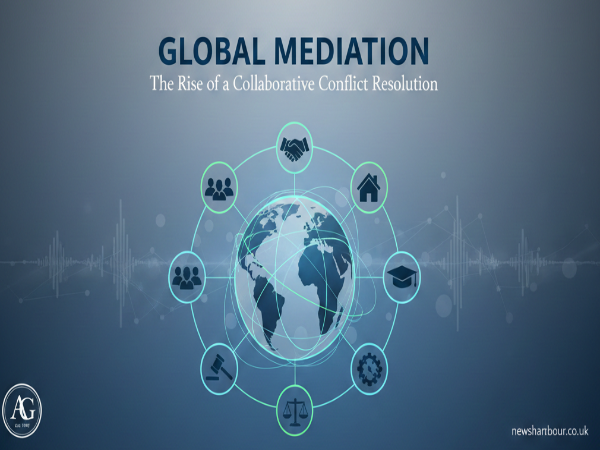
Global mediation is a professional method of resolving disputes that emphasizes communication, understanding, and mutually acceptable solutions without resorting to litigation. Established in 1999 by Adam Gersch, a highly experienced barrister and CEDR-accredited mediator, global mediation has grown to become a trusted approach for managing conflicts in workplaces, families, communities, and commercial settings. By offering a structured, confidential, and impartial platform, global mediation reduces stress, saves time, and fosters lasting agreements between parties, making it a powerful alternative to traditional legal processes.
Introduction: The Rise of Global Mediation
Conflict is an inevitable part of human interaction. From workplace disagreements and family disputes to commercial and international conflicts, disputes can escalate, causing stress, financial loss, and damaged relationships. Traditional litigation often fails to address the underlying issues and can be costly, lengthy, and emotionally draining. This is where global mediation comes into play.
Global mediation offers a structured process where trained mediators facilitate open dialogue between conflicting parties. Instead of imposing solutions, mediators guide the participants to find mutually acceptable resolutions. This method is becoming increasingly popular worldwide, and its growth reflects a shift toward more constructive and collaborative conflict management.
What is Global Mediation?
Global mediation refers to the professional practice of resolving disputes across various sectors, regions, and even countries using mediation techniques. It is not limited to legal disputes but extends to corporate, community, family, and international conflicts. Unlike arbitration or litigation, which involve a third party making binding decisions, mediation is voluntary, confidential, and collaborative.
The primary goal of global mediation is to help parties communicate effectively, explore interests rather than positions, and reach an agreement that satisfies all involved. This approach emphasizes understanding, empathy, and negotiation skills, which are crucial for sustainable solutions.
History of Global Mediation
Global mediation was officially established in 1999 by Adam Gersch, a barrister with extensive litigation experience and a CEDR-accredited mediator. Adam recognized that traditional litigation often failed to resolve the root causes of disputes and imposed significant stress and financial burden on all parties.
His vision was to create a professional mediation service that could handle a wide variety of disputes efficiently and amicably. Since its inception, global mediation has expanded its services to include workplaces, families, communities, education systems, and commercial environments, making it a widely respected and versatile conflict resolution method.
Importance of Global Mediation
Reducing Stress and Emotional Strain
One of the most significant benefits of global mediation is its ability to reduce emotional strain. Legal battles often exacerbate tensions and prolong conflicts. Mediation provides a safe and neutral environment where parties can express their concerns without fear of judgment, fostering mutual understanding.
Cost-Effective Dispute Resolution
Global mediation significantly reduces the financial costs associated with litigation. Court cases can take months or years, often resulting in high legal fees. Mediation sessions, in contrast, are quicker, more efficient, and focus on resolving the issues at hand rather than assigning blame.
Preserving Relationships
Unlike adversarial legal proceedings, global mediation prioritizes preserving relationships. In family disputes, workplace conflicts, or business negotiations, maintaining a working relationship is often more important than winning a case. Mediation encourages collaboration and mutual respect.
Key Principles of Global Mediation
-
Voluntary Participation: Parties choose to engage in mediation willingly.
-
Confidentiality: All discussions during mediation are private, promoting open communication.
-
Neutral Facilitation: Mediators do not take sides or impose solutions.
-
Mutual Agreement: Resolutions are created collaboratively, ensuring that all parties feel heard.
-
Flexibility: Mediation adapts to the needs of the participants, allowing creative solutions.
These principles distinguish global mediation from other conflict resolution methods and ensure a fair and balanced process.
Global Mediation in Different Sectors
Workplace Mediation
Conflicts in workplaces can decrease productivity, increase employee turnover, and create a toxic environment. Global mediation in the workplace addresses team disputes, managerial conflicts, and organizational challenges, helping employees communicate better and rebuild trust.
Family and Community Mediation
Family disputes, including divorce, child custody, and inheritance issues, can be deeply emotional. Community conflicts, such as neighborhood disputes, also benefit from mediation. Global mediation provides structured sessions that prioritize empathy and understanding, helping families and communities reach amicable solutions.
Commercial and Business Mediation
In commercial disputes, such as contract disagreements or partnership conflicts, mediation is highly effective. By focusing on interest-based negotiation, global mediation allows businesses to resolve issues without damaging reputations or disrupting operations.
Educational Mediation
Schools and universities face conflicts involving students, parents, and staff. Global mediation supports Special Educational Needs and Disability (SEND) disputes, bullying incidents, and staff disagreements, fostering a collaborative and supportive learning environment.
How Global Mediation Works
Initial Contact
Parties reach out to a mediator or mediation service to discuss the nature of the dispute.
Agreement to Mediate
Participants sign an agreement outlining the confidentiality, voluntary participation, and structure of the mediation process.
Mediation Sessions
The mediator facilitates sessions where parties express concerns, identify interests, and explore options for resolution.
Negotiation and Resolution
Parties collaboratively develop solutions. The mediator ensures that all voices are heard and guides the conversation toward practical outcomes.
Final Agreement
A written agreement is drafted and signed. While not legally binding in all cases, it serves as a formal record and can be enforceable depending on the context.
Skills of a Global Mediator
-
Active Listening: Understanding both explicit and underlying concerns.
-
Impartiality: Maintaining neutrality and fairness throughout the process.
-
Conflict Analysis: Identifying the root causes of disagreements.
-
Communication Facilitation: Helping parties articulate their perspectives.
-
Problem-Solving: Guiding participants toward creative, mutually acceptable solutions.
These skills are essential for effective mediation and ensure that the process remains professional and productive.
Advantages of Global Mediation
-
Speed: Conflicts are resolved faster than through courts.
-
Cost-Efficiency: Mediation avoids high litigation expenses.
-
Confidentiality: Sensitive information remains private.
-
Control: Parties maintain control over the outcome.
-
Relationship Preservation: Collaboration reduces long-term tension and hostility.
Challenges in Global Mediation
While highly effective, global mediation faces challenges:
-
Reluctance to Participate: Some parties prefer litigation or feel mediation may not be taken seriously.
-
Cultural Differences: In international disputes, cultural norms can influence communication and expectations.
-
Complexity of Issues: Highly complex legal or technical disputes may require expert input alongside mediation.
Despite these challenges, mediation remains a highly adaptable and effective tool.
Global Mediation vs. Traditional Legal Proceedings
| Feature | Global Mediation | Litigation |
|---|---|---|
| Time | Quick | Lengthy |
| Cost | Low | High |
| Flexibility | High | Low |
| Confidentiality | Yes | Limited |
| Relationship Impact | Preserves | Often strains |
| Outcome Control | Parties decide | Judge decides |
This comparison highlights why global mediation is increasingly preferred for resolving disputes.
Future of Global Mediation
Global mediation is expanding rapidly due to:
-
Increasing Awareness: Organizations and individuals recognize the benefits of non-adversarial conflict resolution.
-
Technological Integration: Online mediation platforms allow virtual sessions, increasing accessibility.
-
Globalization: Cross-border disputes require culturally aware and adaptable mediation practices.
-
Government and Legal Support: Many countries now encourage or mandate mediation before litigation in civil disputes.
The future points to greater adoption, more professional training, and wider integration across sectors.
Conclusion
Global mediation is more than just a method of resolving disputes — it is a revolutionary approach that transforms how conflicts are managed across personal, corporate, and international contexts. Established by Adam Gersch in 1999, it combines professional expertise, structured facilitation, and a focus on collaborative problem-solving to deliver efficient, cost-effective, and emotionally intelligent outcomes.
As disputes continue to evolve in complexity and scale, global mediation offers a flexible, human-centered, and sustainable solution for resolving conflicts. Its principles of voluntary participation, confidentiality, neutrality, and mutual agreement make it a model for the future of conflict resolution worldwide.