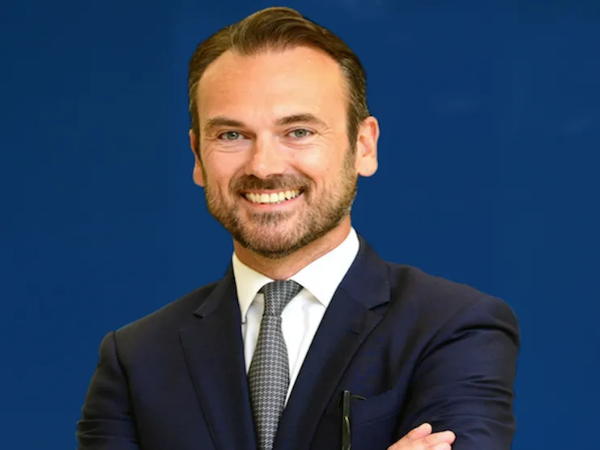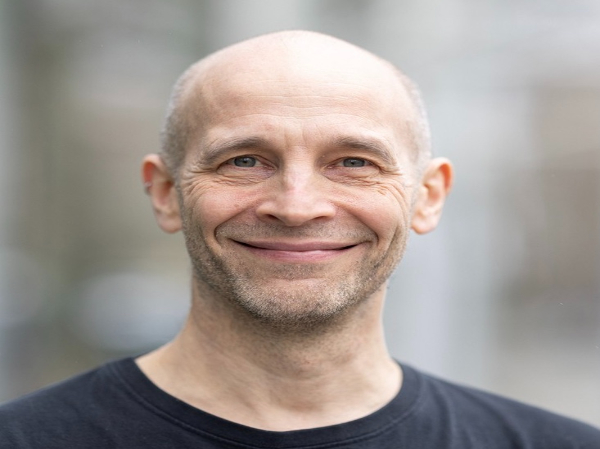
Kevin Buzzard, born on 21 September 1968, is a renowned British mathematician and Professor of Pure Mathematics at Imperial College London. Known for his groundbreaking work in arithmetic geometry, number theory, and the Langlands program, he has also become a pioneer in computer-assisted mathematics. As a key figure in the Lean theorem prover project, Buzzard is actively formalizing Fermat’s Last Theorem and leading efforts to integrate machine-verified proofs into modern mathematics, transforming both research and education.
Early Life and Education
Kevin Mark Buzzard was born on 21 September 1968, making him 57 years old. From a young age, he displayed extraordinary mathematical talent. He attended the Royal Grammar School, High Wycombe, where he first gained national attention by participating in the International Mathematical Olympiad. In 1986, he won a bronze medal, and just a year later, he achieved a perfect-score gold medal, highlighting his exceptional problem-solving skills.
Buzzard went on to study mathematics at Trinity College, Cambridge, where he earned a Bachelor of Arts (BA) degree. At Cambridge, he achieved the prestigious title of Senior Wrangler in 1990, a distinction given to the top-performing student in the rigorous mathematics tripos. Following this, he completed the Certificate of Advanced Study in Mathematics, known as Part III, in 1991, a program recognized worldwide for its intensity and depth in advanced mathematical study.
He pursued his doctoral studies under the supervision of Richard Taylor, earning his PhD in 1995. His thesis, titled “The Levels of Modular Representations,” focused on the deep connections between algebraic number theory and modular forms, laying the foundation for his future contributions to arithmetic geometry.
Academic Career
Following his PhD, Buzzard held several prestigious postdoctoral positions. He spent time at the Institute for Advanced Study in Princeton in 1995, an institution famous for nurturing some of the world’s greatest mathematicians. He then moved to the University of California, Berkeley, for a postdoctoral research position between 1996 and 1997. In 2000, he was a researcher at the Institut Henri Poincaré in Paris, further solidifying his international reputation.
In 1998, Buzzard joined Imperial College London as a lecturer. He quickly rose through the academic ranks, becoming a Reader in 2002 and being appointed Professor of Pure Mathematics in 2004. Throughout his career, he has also held visiting positions at Harvard University and other leading institutions, reflecting his global influence in mathematics.
Research Contributions
Number Theory and Arithmetic Geometry
Buzzard’s early research focused on number theory and arithmetic geometry, particularly on modular forms and Galois representations. His work has contributed to understanding the Langlands program, a set of far-reaching conjectures linking number theory, representation theory, and geometry. He has explored modular forms over various fields, contributing important insights into their properties and computational applications.
He has worked on topics such as weight-one modular forms, p-adic modular forms, and the theory of eigenvarieties, all of which play a crucial role in modern number theory. His research has deep implications for cryptography, algebraic geometry, and the broader understanding of mathematical structures.
Formal Proof and Computer-Assisted Mathematics
More recently, Buzzard has become a pioneer in formal proof verification, a field that applies computer systems to check the correctness of mathematical proofs. He is a central figure in the Lean theorem prover project and one of the main maintainers of Mathlib, a comprehensive mathematics library designed for the Lean proof assistant.
Buzzard founded the Xena Project, a unique program that teaches undergraduate students to write and verify proofs using Lean. The initiative demonstrates how formal proof techniques can be integrated into standard mathematical education, preparing students for a future where computer-assisted verification is commonplace.
Formalizing Fermat’s Last Theorem
One of Buzzard’s most ambitious projects is the formalization of Fermat’s Last Theorem (FLT) in Lean. This effort aims to encode Andrew Wiles’ famous proof in a machine-verifiable form, ensuring every logical step is rigorously checked. The project highlights Buzzard’s vision of a future where computers act not merely as calculators but as partners in mathematical reasoning.
He has emphasized the transformative potential of formalized mathematics, arguing that machine-verified proofs could prevent errors in complex research and make advanced mathematics accessible to more people. By formalizing such landmark results, Buzzard is pushing the boundaries of what is possible in modern mathematics.
Teaching Philosophy and Influence
Buzzard is not only a leading researcher but also an inspiring educator. At Imperial College London, he integrates Lean into undergraduate and graduate courses, teaching students how to formalize proofs and develop rigorous reasoning skills. His approach emphasizes clarity, precision, and the use of computational tools to enhance understanding.
He has mentored numerous students who have gone on to significant careers in mathematics, highlighting his influence in shaping the next generation of mathematical minds. His commitment to teaching reflects his belief that formal methods will become a standard part of mathematical practice worldwide.
Awards and Honors
Kevin Buzzard’s contributions have been recognized with several prestigious awards. In 2002, he received the Whitehead Prize from the London Mathematical Society, recognizing his outstanding achievements in number theory. In 2008, he was awarded the Senior Berwick Prize for his significant contributions to mathematical research.
In addition to his research accolades, Buzzard has been recognized for his innovative teaching methods and dedication to formal proof education. In 2022, he delivered a plenary lecture at the International Congress of Mathematicians, highlighting the growing importance of formal verification in modern mathematics.
Personal Life and Family
Public details about Kevin Buzzard’s personal life and family are limited. He tends to focus public attention on his professional achievements rather than his private affairs. While he is known as a dedicated educator and researcher, little is publicly known about his marital status, children, or broader family connections.
Net Worth
There is no verified information about Kevin Buzzard’s net worth. As a professional academic, his income likely comes from his university salary, research grants, and possibly stipends for lectures or collaborations. Unlike celebrities or entrepreneurs, his financial profile is not publicly documented, and any estimates would be speculative.
Wikipedia and Public Recognition
Kevin Buzzard is featured on Wikipedia, where his academic accomplishments, teaching initiatives, and research contributions are documented. His profile highlights his unique combination of classical mathematical expertise and pioneering work in formal proof verification. He is regarded as one of the most influential contemporary mathematicians bridging traditional theory and computational innovation.
Why Kevin Buzzard is a Key Figure in Modern Mathematics
-
Bridging Tradition and Technology: Buzzard merges classical arithmetic geometry and number theory with computational formal proof, showing how computers can verify even the most intricate proofs.
-
Innovative Teaching: Through projects like Xena and the integration of Lean into curricula, he is preparing students for a future where mathematics and technology intersect seamlessly.
-
Pioneering Research: By formalizing landmark theorems like Fermat’s Last Theorem, he is setting a standard for rigor and accessibility in mathematics.
-
Leadership in Lean and Mathlib: His contributions ensure that the Lean community has robust tools for modern mathematical research and education.
Impact on the Future of Mathematics
Kevin Buzzard’s vision represents a major shift in how mathematics is performed, taught, and verified. Machine-verified proofs, once considered niche, are increasingly viewed as essential in ensuring correctness in complex research. By formalizing Fermat’s Last Theorem, maintaining Mathlib, and educating the next generation, Buzzard is shaping a future where computers and humans collaborate closely in the pursuit of mathematical truth.
Conclusion
Kevin Buzzard stands at the intersection of historical mathematics and modern computational innovation. At 57 years old, he continues to influence both research and education, pushing the boundaries of what can be achieved with computer-assisted mathematics. While details of his family and personal life remain private, his professional legacy is clear: he is transforming how proofs are created, verified, and taught. Through his work with Lean, Mathlib, and ambitious projects like formalizing Fermat’s Last Theorem, Kevin Buzzard is ensuring that mathematics is not only more rigorous but also more accessible and future-ready.
He remains a trailblazer in the global mathematical community, a teacher, mentor, and researcher whose influence will be felt for decades. Kevin Buzzard embodies the future of mathematics: deeply rooted in theory, yet boldly reaching into the computational frontier.