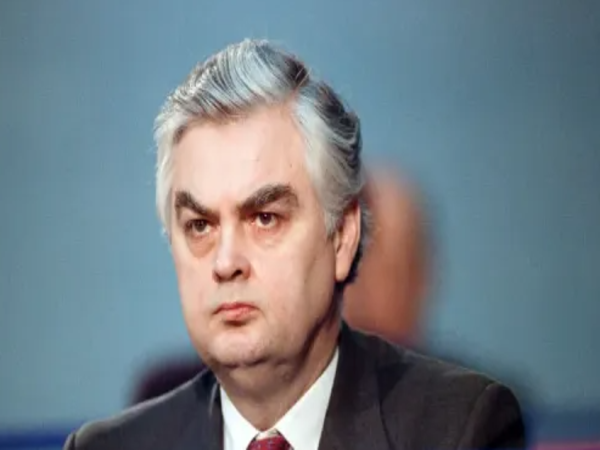
Norman Lamont, formally known as Norman Stewart Hughson Lamont, Baron Lamont of Lerwick, is a prominent British politician and life peer best known for serving as Chancellor of the Exchequer from 1990 to 1993 under Prime Minister John Major. Born on 8 May 1942 in Lerwick, Shetland Islands, Lamont played a pivotal role in shaping Britain’s economic direction during a turbulent era marked by Black Wednesday and intense debates over Europe. Beyond politics, he has held positions in the financial sector, contributed to public discourse as a commentator, and remains a notable voice on economic and EU matters.
Early Life and Education
Norman Lamont was born on 8 May 1942 in the scenic Shetland Islands of Scotland. Growing up in a family that valued education and civic engagement, he displayed a keen interest in politics and economics from a young age. Lamont attended Loretto School, one of Scotland’s prestigious boarding schools, where his leadership skills first began to emerge. He later matriculated at Fitzwilliam College, Cambridge, earning a degree in economics and actively participating in student politics, including serving as president of the Cambridge Union, a renowned debating society that has shaped many British political careers.
Following his university education, Lamont worked in merchant banking with NM Rothschild & Sons, gaining critical experience in financial markets that would later inform his economic policies as Chancellor. This early blend of education and professional exposure laid the foundation for a political career that would intersect with some of Britain’s most challenging economic periods.
Political Career: Rise to Power
Lamont’s formal entry into politics came in 1972, when he was elected as the Conservative Member of Parliament (MP) for Kingston-upon-Thames. Over the next two decades, he rose steadily through party ranks, holding several key Treasury positions. He became Financial Secretary to the Treasury, followed by Chief Secretary to the Treasury, roles that positioned him at the heart of Britain’s financial policymaking.
His career reached its pinnacle in 1990, when Prime Minister John Major appointed him Chancellor of the Exchequer, succeeding John Major himself. Lamont inherited a challenging economic landscape, including high inflation, a struggling property market, and pressure to maintain the pound within the European Exchange Rate Mechanism (ERM).
Chancellor of the Exchequer: Black Wednesday and Economic Challenges
As Chancellor, Norman Lamont faced one of the most turbulent economic periods in modern British history. Black Wednesday, which occurred on 16 September 1992, marked a dramatic turning point. Speculative attacks on the pound forced Britain to withdraw from the ERM, leading to immediate political and economic repercussions. Despite criticism at the time, Lamont’s policies helped stabilize the economy in the aftermath, introducing inflation targeting and measures that laid the groundwork for future economic growth.
During his tenure, Lamont also played a critical role in negotiations related to the Maastricht Treaty, securing Britain’s opt-out from joining the euro. His efforts reflected a balance between maintaining economic stability and asserting national sovereignty, a theme that would continue to define his later career as a public commentator and eurosceptic advocate.
Norman Lamont Age
As of 2026, Norman Lamont is 83 years old, having been born on 8 May 1942. Despite his age, he remains active in public debates and continues to offer insights on economic policy, Brexit, and international finance. His longevity in political and public life highlights both his experience and continued relevance in British affairs.
Norman Lamont Family
Lamont comes from a family with strong roots in the Shetland Islands, though he has maintained a relatively private personal life. He married Lucinda Shirley, Lady Lamont, and the couple has shared a longstanding partnership. While Lamont has focused much of his public life on politics and economics, his family has been a quiet support system throughout his career, underscoring the balance he has maintained between public service and private life.
Life Peerage and Later Political Roles
After losing his parliamentary seat in the 1997 general election, Lamont was elevated to the House of Lords as Baron Lamont of Lerwick in 1998. In the House of Lords, he continued to influence economic and European policy debates, establishing himself as a leading eurosceptic voice within the Conservative Party. His insights on Brexit, currency policy, and financial stability have been widely cited in political commentary, further cementing his reputation as a knowledgeable and principled policymaker.
Norman Lamont Net Worth
Norman Lamont’s net worth is estimated to be around £5–10 million, reflecting his extensive career in politics, advisory roles, and financial sectors. Beyond his parliamentary salary, Lamont has served on corporate boards, advised investment firms, and participated in public speaking engagements, all of which have contributed to his financial standing. While precise figures vary, his wealth underscores the intersection of high-level political influence and financial acumen.
Contributions to Economic Thought and Policy
Lamont’s impact extends beyond his time in office. He has written extensively and spoken publicly on topics including:
-
Monetary policy and inflation control
-
The UK’s relationship with the European Union
-
Financial stability and risk management
-
The economic consequences of Brexit
Through these contributions, Lamont has influenced both policy and public understanding of economic issues, demonstrating the enduring significance of his expertise.
Norman Lamont Wikipedia Overview
A typical Wikipedia-style summary would describe Lamont as a British politician and life peer, born in 1942, who served as Chancellor of the Exchequer under John Major. It would highlight his tenure during Black Wednesday, his contributions to EU negotiations, and his later role as a life peer advocating euroscepticism. His education, early career in banking, and continued commentary on economics and policy are also key elements of his public profile.
Legacy and Public Perception
Norman Lamont’s legacy is multifaceted:
-
Economic Policy Leadership: Despite the challenges of Black Wednesday, his policies laid a foundation for economic recovery in the UK.
-
European Policy Influence: Lamont’s role in negotiating opt-outs from the euro and advocating for careful scrutiny of EU integration has left a lasting mark on British politics.
-
Public Commentary: His continued engagement in debates on economics, fiscal policy, and Brexit keeps him relevant in contemporary political discourse.
Critics sometimes view him through the lens of Black Wednesday, but supporters recognize his prudence and long-term vision for the UK economy.
Conclusion
Norman Lamont is more than a former Chancellor; he is a pioneering figure in modern British politics, whose career spans decades of economic, political, and public service. From his early life in the Shetland Islands to the turbulent years of Black Wednesday and his influential role as a life peer, Lamont has left an indelible mark on Britain’s financial and political landscape. With continued contributions to public discourse, he remains a respected and insightful voice on matters of national and global importance.