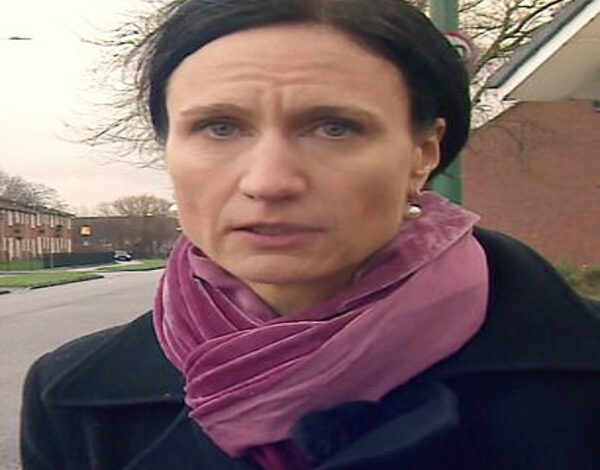
Patricia Wiltshire is a pioneering British forensic ecologist, botanist, and palynologist renowned for using plants, soils, and fungi as trace evidence to solve hundreds of criminal cases. Her groundbreaking work has transformed forensic science, linking suspects to crime scenes through microscopic botanical clues. With a career spanning decades, Wiltshire’s expertise has been crucial in some of the UK’s most high-profile investigations, earning her global recognition as the “plant detective.”
Who Is Patricia Wiltshire?
Patricia Wiltshire is one of the world’s most respected forensic scientists, known for blending ecology, botany, and palynology (the study of pollen and spores) to assist in criminal investigations. Her scientific insights have solved over 250 serious crimes in the United Kingdom, from murders to abductions and environmental cases. She is often referred to as the woman who listens to nature’s testimony, because her evidence comes not from fingerprints or DNA but from the smallest fragments of the natural world — a grain of pollen, a clump of soil, or a spore from a fungus.
Born on February 16, 1942, in Monmouthshire, South Wales, Patricia Wiltshire’s journey into forensic ecology was not straightforward. Initially, she worked as a medical laboratory technician before pursuing a degree in botany. Over time, her fascination with how plants and soils record human activity led her to apply ecological principles in crime-scene investigations. Today, her name is synonymous with forensic botany and ecological evidence in courtrooms across the UK.
Patricia Wiltshire’s Age and Early Life
As of 2025, Patricia Wiltshire is 83 years old. Born in post-war Wales, she grew up surrounded by the rugged beauty of the countryside, where her early interest in nature began. However, her childhood was not without hardship — at just seven years old, she suffered a serious accident that left her with burns and long periods of illness. Despite this, her curiosity about the natural world never faded.
In her later interviews, Wiltshire often recalled how she would wander through fields and forests, observing the subtle patterns of plant life and seasonal change. Those early experiences laid the foundation for a career that would one day change the landscape of forensic science.
Education and Academic Journey
Patricia Wiltshire studied Botany at King’s College London, graduating with honors. She later earned a Ph.D. from the University of Aberdeen, where her research focused on plant ecology and microscopic organisms in soils. Her scientific curiosity extended beyond pure botany into palynology, the study of pollen grains and spores — a field that would eventually become central to her forensic work.
Her academic background gave her a deep understanding of how ecosystems respond to disturbance. This knowledge became invaluable when she began applying it to crime scenes. For instance, she realized that when a body is buried or moved, the surrounding vegetation and soil composition reveal distinct signs of disruption. These patterns, invisible to most, could tell her not only where a crime occurred but sometimes when it happened.
Wiltshire later became a Visiting Professor in Forensic Ecology, Botany, and Palynology at the University of Southampton and helped establish a postgraduate program in Forensic Archaeological Science at University College London (UCL). Her academic influence continues to inspire new generations of forensic scientists.
Career in Forensic Science
Patricia Wiltshire’s transition into forensic work began when she was asked to assist the police in analyzing soil samples from a crime scene. Her precise and scientific approach yielded such valuable results that law enforcement quickly recognized her potential. Over the next several decades, she became one of the most sought-after experts in the UK for ecological and botanical evidence.
Her casework spans more than 250 investigations, covering everything from murder and sexual assault to hidden graves and environmental crimes. She worked closely with police forces, forensic pathologists, and legal teams, helping to build connections between suspects and crime scenes using microscopic biological traces.
Wiltshire’s expertise was pivotal in the Soham murders of 2002, one of Britain’s most tragic and high-profile cases. Her analysis of vegetation and soil found on the victims and the suspect’s vehicle helped confirm the movement of the bodies and corroborated other forensic findings. This case solidified her reputation as a trailblazer in forensic ecology.
Patricia Wiltshire’s Approach to Forensic Ecology
Wiltshire’s work is based on the principle that nature records everything. Whenever someone walks through a field, digs a hole, or moves an object, the surrounding plants, spores, and soils retain evidence of that activity. These traces — though invisible to the naked eye — can be analyzed under microscopes to reveal critical details about the crime scene.
Her specialties include:
-
Palynology: Identifying pollen grains and spores to determine where a suspect or object has been.
-
Forensic Botany: Studying plant fragments to link evidence to specific locations.
-
Mycology: Using fungi as indicators of decomposition, burial, or time since death.
-
Soil Ecology: Examining soil layers and microbial communities to reconstruct site history.
In her own words, “Every living thing leaves its signature in the environment. My job is to read those signatures and translate them into evidence that the court can understand.”
Patricia Wiltshire’s Family and Personal Life
Patricia Wiltshire has been relatively private about her personal life, keeping her family out of the public eye. What is known is that she lives in Surrey, England, and has served her local community as a councillor for Mole Valley District Council. Her dedication to public service reflects the same sense of responsibility that defines her scientific career.
Wiltshire often mentions that her work required immense personal sacrifice, with long hours in laboratories and at crime scenes. She has expressed gratitude for the support of her close family, though she seldom speaks about them publicly to maintain privacy. Her life story, detailed in her memoir “Traces: The Memoir of a Forensic Scientist and Criminal Investigator”, offers glimpses into the balance she maintained between her demanding profession and personal commitments.
Patricia Wiltshire’s Net Worth and Achievements
While exact figures are not publicly disclosed, Patricia Wiltshire’s net worth is estimated to be between £1 million and £3 million as of 2025. Her income sources include her academic roles, consultancy work for law enforcement, expert witness appearances in court, book royalties, and public speaking engagements.
Her achievements are not merely financial — they represent decades of dedication to science and justice. Wiltshire’s work has changed how police investigate crimes, influencing how ecological evidence is collected and presented in court. She has authored numerous research papers, contributed to forensic textbooks, and lectured internationally on the integration of environmental science with criminal investigation.
Patricia Wiltshire’s Wikipedia Presence
The Patricia Wiltshire Wikipedia page provides a concise overview of her biography, education, and major forensic contributions. It highlights her pioneering role in developing forensic ecology as a recognized scientific discipline and details key cases where her expertise played a vital role. Wikipedia entries about her are frequently updated to include her professional affiliations, public lectures, and publications.
Her memoir “Traces”, published in 2019, expanded her public profile further. The book blends scientific insight with real-life crime stories, offering readers a glimpse into the emotional and ethical dimensions of forensic investigation. It has received critical acclaim for its honesty, clarity, and contribution to public understanding of forensic science.
The Importance of Her Work in Modern Forensics
Patricia Wiltshire’s contribution to forensic science extends beyond solving crimes — she helped establish a new branch of forensic methodology. Before her work, the use of plants and soil evidence was largely overlooked in criminal cases. Today, thanks to her influence, forensic ecology and botany are recognized as vital components of investigative science.
Her methods have been adopted in universities, police training programs, and forensic laboratories worldwide. By demonstrating that ecological evidence can be as conclusive as fingerprints or DNA, she has expanded the possibilities for justice. Her interdisciplinary approach encourages collaboration between ecologists, archaeologists, and forensic experts, ensuring that no clue — however small — is ignored.
Patricia Wiltshire’s Philosophy and Legacy
Wiltshire often emphasizes the moral and ethical weight of her work. She believes that science must serve truth and compassion. Each case, she says, is not merely a puzzle to solve but a story of human loss that demands empathy and integrity.
Her legacy lies not only in the hundreds of convictions her evidence supported but also in the inspiration she provides to scientists, especially women in STEM fields. Through lectures and public appearances, she encourages curiosity, discipline, and respect for the natural world.
Her approach has inspired a generation of forensic professionals to look beyond the laboratory and see the environment itself as a witness to crime.
Awards and Recognition
Over her long career, Patricia Wiltshire has received numerous honors for her contributions to science and criminal justice. She has been awarded honorary degrees, fellowships, and recognition from law enforcement bodies. Her public service and academic influence have made her a respected figure in both scientific and civic circles.
She continues to mentor young scientists, participate in research projects, and advocate for the proper use of forensic evidence in legal systems. Her enduring impact is felt every time a forensic ecologist examines a crime scene with a microscope and a sense of wonder.
Interesting Facts About Patricia Wiltshire
-
She is sometimes called “The Pollen Woman” in the media for her unique ability to solve cases using pollen and spores.
-
Wiltshire has appeared on various documentary programs about forensic science and criminal investigation.
-
She believes that every environment “speaks” — it just takes the right kind of scientist to interpret it.
-
Despite dealing with grim cases, she maintains a love for gardening and spends her free time nurturing plants.
Patricia Wiltshire’s Continued Influence
Even in her eighties, Patricia Wiltshire remains an active voice in forensic science. She consults on complex cases, advises universities, and writes about the evolving role of ecology in crime detection. Her work proves that science and nature are not separate realms but interconnected systems capable of revealing profound truths.
As forensic technology advances, Wiltshire’s principles continue to guide the integration of environmental evidence into digital and molecular investigations. Her emphasis on observation, patience, and respect for nature ensures that her methods remain timeless.
Conclusion
Patricia Wiltshire’s life and work demonstrate how one person’s curiosity about nature can reshape an entire field of science. From the coal valleys of Wales to the courtrooms of the United Kingdom, her journey embodies perseverance, intelligence, and integrity.
Through her innovative use of plants, pollen, and fungi, she has given nature a voice in the pursuit of justice. Her story is not just about forensic breakthroughs but about humanity’s deep connection to the environment — a reminder that even the smallest seed or spore can hold the truth.
Patricia Wiltshire is more than a scientist; she is a storyteller of the natural world, revealing how every leaf and grain of soil can speak on behalf of the silent.